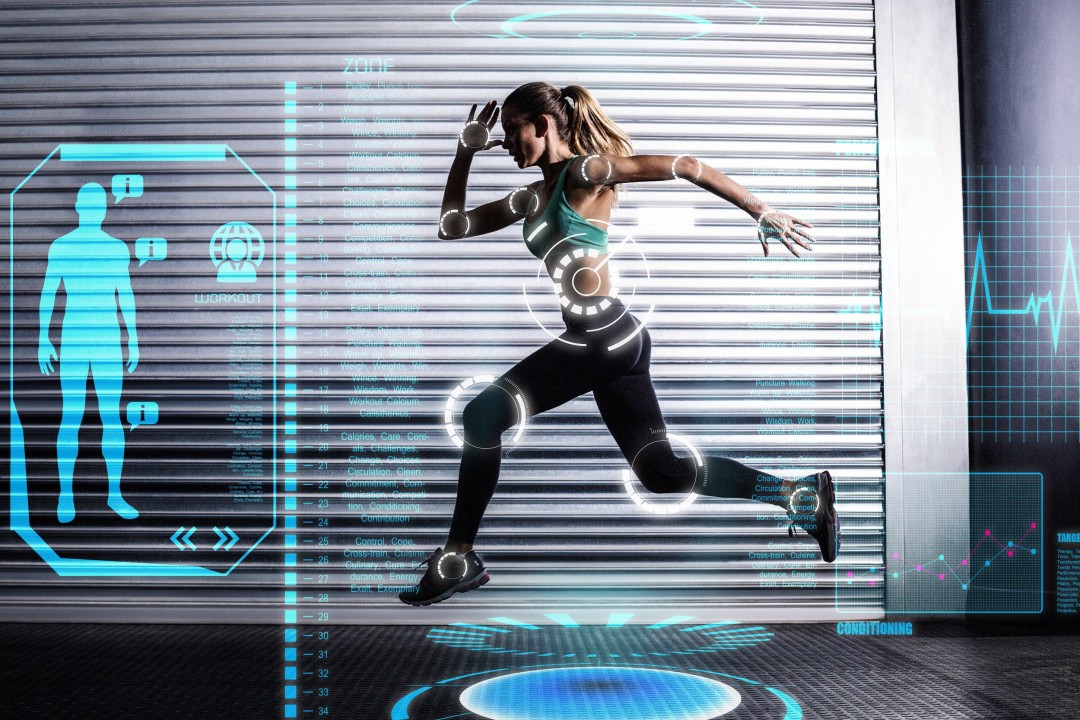
Singapore’s position as a Smart Nation is not just a government initiative on paper. It is visible in the daily behaviour of a population that adopted contactless payment before most of the world had heard of it, embraced telehealth during the pandemic and kept using it, and now increasingly expects the same data intelligence that governs their professional and financial lives to be present in their fitness environment too. The best gym in Singapore in 2026 is not simply one with excellent equipment. It is one that uses technology to make every training session more informed, more accountable, and more connected to measurable outcomes.
The Evolution of Gym Technology: From Basic Machines to Smart Training Ecosystems
The technology arc of the fitness industry has accelerated dramatically in the past decade. The first wave of gym technology was simple: treadmills with digital speed and time displays, heart rate chest straps that connected to cardio machines, and basic body weight scales at the gym entrance. These tools provided information but offered no intelligence. They told you what was happening without helping you understand what it meant or what to do about it.
The second wave brought connected devices. Fitbits and early Apple Watches appeared on members’ wrists. Gym equipment manufacturers began integrating Bluetooth connectivity so treadmill and rowing machine data could sync to smartphones. Classes started being tracked on apps. The information flow increased, but it remained largely siloed: your wearable data lived in one app, your class attendance in another, and your body composition tracked nowhere in particular.
The third wave, which is firmly established in 2026, is the integration wave. Fitness technology in the leading Singapore gyms now connects wearable data, body composition scanning, class performance metrics, and personalised training prescriptions into coherent ecosystems that tell a continuous, contextual story of each member’s physical adaptation. This is not just convenient. It is transformative for the quality of training decisions that both members and coaches can make.
Wearable Technology and What the Data Actually Tells You in 2026
The wearable fitness technology market has matured significantly. The novelty of counting steps, which characterised the first generation of fitness trackers, has given way to a more sophisticated understanding of which metrics are genuinely actionable and which are marketing-driven noise.
Heart rate during exercise is reliably measured by optical wrist-based sensors in modern wearables and provides genuine training value when used to manage exercise intensity. Training in specific heart rate zones, calibrated to individual maximum heart rate, allows gym-goers to ensure their aerobic conditioning sessions are actually building aerobic capacity rather than just feeling difficult. Cardiovascular overtraining occurs when every session is pushed to maximum perceived effort regardless of heart rate, which drives up fatigue without providing proportional aerobic adaptation.
Heart rate variability (HRV) has emerged as the most clinically validated and practically useful metric that consumer wearables now measure. HRV reflects the variation in time intervals between consecutive heartbeats and is governed by the balance between the sympathetic (activating) and parasympathetic (recovery) branches of the autonomic nervous system. High HRV indicates a well-recovered, adaptable nervous system. Low HRV, measured consistently across several days, indicates accumulated fatigue, inadequate recovery, or oncoming illness.
In 2026, several leading wearable platforms have incorporated HRV-based readiness scores that give gym-goers a daily recommendation on whether to train at high intensity, moderate intensity, or prioritise recovery. The research support for HRV-guided training is now substantial: a 2023 randomised controlled trial published in the International Journal of Sports Physiology and Performance found that athletes who adjusted training intensity based on HRV readiness scores outperformed those following fixed periodised programmes in both performance outcomes and injury rate reduction.
Sleep tracking, another core wearable function, has similarly improved in accuracy and clinical utility. Modern devices distinguish between light, deep, and REM sleep stages using a combination of accelerometer data, heart rate patterns, and skin temperature variation. For gym-goers optimising recovery, understanding the proportion of restorative sleep stages achieved on a given night provides an evidence-based input into the following day’s training intensity decisions.
The important caveat in 2026 is that wearable data is most valuable when interpreted as a trend over weeks and months rather than as a directive on any single day. Day-to-day variation in HRV, sleep score, and energy metrics is normal and expected. The actionable signals are consistent patterns: a week of declining HRV, several consecutive nights of poor deep sleep, or a resting heart rate that has been elevated for several days. These trends warrant a genuine training load adjustment.
Bioelectrical Impedance Analysis: The Most Clinically Valuable Gym Technology Most Members Underuse
Among all the fitness technologies available in Singapore’s premium gyms in 2026, bioelectrical impedance analysis (BIA) using clinical-grade devices like the InBody series remains the most underutilised relative to its clinical value.
The principle behind BIA is that different body tissues conduct electrical current differently. Muscle, which contains significant water and electrolytes, conducts electricity well. Fat tissue, which is largely anhydrous, resists it. By sending a small, imperceptible electrical current through the body and measuring the resistance and reactance at multiple frequencies and across multiple body segments, InBody devices calculate a detailed picture of body composition that no external measurement can match.
A full InBody scan in 2026 provides segmental muscle mass by limb and trunk (revealing muscular imbalances that increase injury risk), body fat mass by segment (showing whether fat distribution is peripheral or central), visceral fat level on a standardised scale, skeletal muscle mass, basal metabolic rate, and phase angle. Phase angle is a particularly clinically interesting metric: it reflects cell membrane integrity and is a validated marker of cellular health that declines under chronic overtraining, severe caloric restriction, and ageing. Tracking phase angle across repeated scans provides an early signal of systemic physiological stress.
The practical value for gym-goers is that InBody data translates subjective training effort into objective physiological outcomes. A member who has been training consistently for 12 weeks and wonders whether they are actually building muscle and losing fat gets a definitive answer from a follow-up InBody scan rather than relying on mirror assessment and scale weight. The segmental data is particularly valuable: it is not uncommon to discover that the left leg has significantly less muscle mass than the right, or that trunk fat is disproportionate to limb fat, which points to movement patterns or exercise selection that should be adjusted.
AI-Powered Training and Programme Design in 2026
Artificial intelligence has moved from a fitness marketing term to a genuinely functional component of training technology in 2026. The most meaningful applications are in programme design, load management, and movement quality assessment.
AI-assisted programme design uses an individual’s training history, performance data, body composition metrics, and recovery indicators to generate periodised training plans that adapt dynamically to ongoing performance. Where a static programme prescribes the same progression regardless of how the member is actually responding, an AI-assisted programme adjusts load, volume, and exercise selection based on whether the member is consistently exceeding, meeting, or falling short of performance targets. This kind of responsive programming was previously only available to elite athletes with dedicated coaching staff. In 2026, it is accessible through connected gym platforms and smartphone applications.
Movement quality assessment using computer vision has also matured. Several platforms now use the smartphone camera or gym-installed cameras to analyse squat depth, hip hinge mechanics, and pressing alignment in real time, providing immediate corrective feedback. While this technology cannot yet replace the nuanced, context-sensitive assessment of an experienced human coach, it provides a useful objective check on movement patterns between coached sessions and helps identify compensation patterns that develop gradually over time.
The important boundary that remains is between AI as an analytical and programming tool and AI as a replacement for human coaching judgment. The contextual understanding of a member’s life circumstances, the motivational intelligence required to keep someone engaged through a difficult phase of training, and the hands-on assessment of movement quality under fatigue are capabilities that human personal trainers possess and that AI systems in 2026 augment rather than replace.
TFX Singapore’s technology-enabled training approach reflects this balance: technology provides the data and analytical framework, while expert personal trainers provide the contextual judgment, coaching quality, and human connection that determine whether a member actually achieves their goals over months and years.
Connected Gym Equipment: What Separates a Smart Gym from a Gym with Screens
The distinction between a genuinely technology-integrated fitness facility and one that has simply added screens to conventional equipment is important to understand when evaluating gym memberships in Singapore’s competitive market.
Cardio machines that track performance in watts, pace per 500 metres, and stroke rate rather than just time and approximate calories provide meaningfully more useful training data. A rowing machine session where you can track power output and aim to maintain a specific wattage target for a given duration is a more precisely controllable training stimulus than one where the only feedback is how long you have been rowing. The same principle applies to ski ergs, assault bikes, and other performance cardio equipment.
Integrated class booking and attendance tracking, connected across multiple gym locations, allows members and trainers to see training history in a single dashboard. This data reveals whether a member is consistently attending the class types that align with their programme, whether they are getting adequate recovery between high-intensity sessions, and whether there are patterns of missed sessions that suggest a schedule conflict or motivation issue that a trainer should address.
Member performance dashboards that aggregate body composition history, training attendance, class performance metrics, and programme progression give both the member and their trainer a longitudinal view of adaptation that is far more valuable than any single data point. In 2026, the leading Singapore gym operators have moved toward this integrated data model as a point of competitive differentiation.
Privacy and Data Governance in Singapore’s Fitness Technology Landscape
As fitness technology collects increasingly detailed personal health data, the governance of that data becomes an important consideration for consumers choosing a gym or fitness platform.
Singapore’s Personal Data Protection Act (PDPA) governs the collection, use, and disclosure of personal data by organisations operating in Singapore. Biometric data such as body composition measurements, heart rate data, and movement patterns fall under the category of personal data and are subject to PDPA protections. Members have the right to access their own data, to request corrections to inaccurate data, and to withdraw consent for specific data uses, subject to the terms of the membership agreement.
Practical questions to ask when signing up with a technology-integrated gym in 2026 include: how long is my body composition and health data retained, who has access to my individual data beyond my assigned personal trainer, is my data used in anonymised aggregate form for the gym’s internal analytics, and what is the process for data deletion if I end my membership. Gyms that answer these questions clearly and in writing as part of their membership terms demonstrate a data governance standard appropriate to the sensitivity of the health information they collect.
The Future of Fitness Technology in Singapore Beyond 2026
Several technologies that are currently at the cutting edge in Singapore’s fitness landscape in 2026 will become mainstream within the next 3 to 5 years.
Continuous metabolic monitoring, currently available through CGM (continuous glucose monitor) devices originally developed for diabetic management, is being adopted by a growing number of performance-oriented gym-goers in Singapore to understand real-time glucose response to different foods and training intensities. The data from continuous glucose monitoring fundamentally changes nutrition strategy: members can see directly how their body responds to chicken rice versus yong tau foo in the context of their post-workout recovery, removing the need for estimated nutritional calculations.
Augmented reality coaching overlays, delivered through smart glasses or mixed-reality headsets, are in advanced development and will allow real-time form correction, load suggestions, and workout cueing to appear in a member’s visual field during training. This will substantially extend the reach of coach guidance beyond formal personal training sessions.
Genetic fitness testing, which analyses variants in genes related to muscle fibre composition, response to aerobic versus resistance training, recovery rate, and injury susceptibility, is becoming more accessible and more actionable. In 2026, early adopters in Singapore’s fitness community are already using genetic profiling to inform training modality preferences and nutritional strategies. Within the next several years, this will likely become a standard feature of premium gym onboarding.
TFX Singapore continues to invest in technology-enabled training infrastructure across their Singapore locations, positioning their facilities at the intersection of expert human coaching and intelligent data tools that help every member train with greater purpose and measurably better outcomes.
Frequently Asked Questions
How reliable are consumer wearables for measuring training-relevant metrics like HRV and sleep stages in 2026?
Modern wearables from leading manufacturers have improved substantially in accuracy over previous generations. HRV measurements from wrist optical sensors are now considered clinically sufficient for guiding training load decisions when averaged over several consecutive mornings rather than read as single-day values. Sleep stage classification is approximately 70 to 80 percent accurate compared to polysomnography gold standards, which is useful for tracking trends but not precise enough for clinical sleep diagnosis. The practical rule is to use wearable data to identify consistent trends rather than to make decisions based on any single day’s reading.
What does an InBody scan measure that a standard weighing scale or BMI calculation cannot provide?
A weighing scale measures only total body mass and cannot distinguish between muscle, fat, water, and bone. BMI divides weight by height squared and provides no information about body composition or fat distribution. An InBody scan separately measures skeletal muscle mass, body fat mass, visceral fat level, body water distribution, and basal metabolic rate, with segmental breakdowns by body part. This information is categorically more useful for both health assessment and training programme design than any measurement a standard scale or BMI formula can provide.
With AI becoming increasingly capable, will personal trainers still be necessary at Singapore gyms in 2026?
Yes, and the argument for human personal training has actually strengthened as AI tools have become more capable. AI excels at data analysis, programme generation, and pattern recognition. What it cannot replicate is the motivational relationship between a skilled trainer and their client, the hands-on physical coaching of movement patterns, the real-time adjustment of a session based on how a member moves and looks on a given day, and the contextual judgment that distinguishes a good day to push hard from a day to back off. The most effective personal training in 2026 combines AI-generated analytical insights with human coaching expertise.
How does the technology at TFX Singapore’s gym locations enhance the training experience for members?
TFX Singapore uses technology-enabled tracking as a core component of their training philosophy, which means the data generated from body composition scans, class attendance, and training performance is integrated into the personalised coaching service that members receive. Members benefit from InBody analysis that tracks their body composition over time, connected class booking that gives trainers visibility of training patterns, and performance equipment that provides actionable data during sessions. The technology serves as an amplifier for the expertise of TFX’s training team rather than a replacement for it.
What should I look for in a smart gym membership in Singapore to ensure the technology investment is genuine rather than superficial?
The most important indicators of genuine technology integration are the availability of clinical-grade body composition scanning (not just basic scales), connected class and training management systems that give trainers access to your full training history across locations, performance-tracking cardio and functional training equipment, and personal trainers who are trained to interpret and act on data from these systems. A gym that has technology visible in its marketing but whose trainers design programmes without reference to data is not delivering on the promise of technology-enabled training.
